Apple Lisa (1983–1985)
Apple bet the company on a $9,995 office computer, sold almost none of them, and accidentally invented the next forty years of personal computing.
Overview
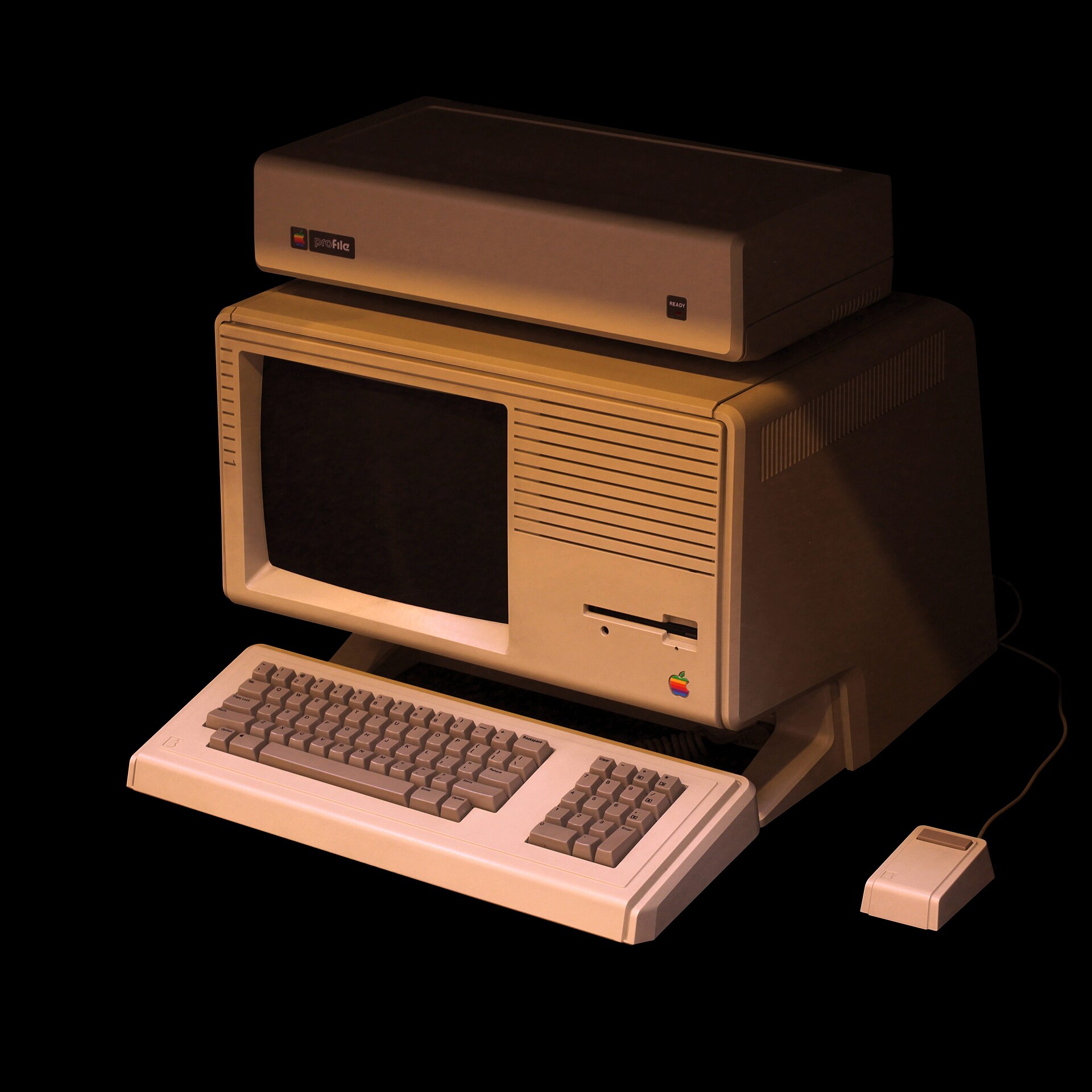
The Apple Lisa is one of those machines whose importance is inversely proportional to how many people bought it. Introduced on 19 January 1983 at a price of $9,995, it was the first personal computer sold to the general public built around a graphical desktop (icons, overlapping windows, pull-down menus, a mouse) instead of a command line. It was a commercial catastrophe. Apple discontinued it in April 1985, barely a year and a half after launch, in favor of its cheaper, less capable sibling, the Macintosh. And yet almost every idea the Lisa shipped is sitting on the screen you are reading this on.
The Lisa was an enormous bet. By Apple's own accounting it cost roughly $50 million and 200 man-years to develop, consuming most of the company's resources and arriving about two years later than originally planned. It was conceived as the machine that would "mark the beginning of a new era in personal computers" and set the software standard of the 1980s. It did exactly that, just not for Apple, and not at a price anyone in an actual office was willing to pay.
What makes the Lisa fascinating from an archival distance is that it was not a half-formed prototype. It was a complete, coherent, deeply considered system: a 32-bit processor, a bit-mapped display, protected memory, cooperative multitasking, and a suite of seven integrated applications, all wrapped in an interface designed, obsessively, to work the way a person already thinks. It was right about almost everything except the two things that sell computers: the price and the timing.
History & Development
The Lisa project changed character in late 1979 around two events that the people who built the interface still cite as the turning point: the announcement of the Motorola 68000 microprocessor, and a series of visits by a small group of Apple engineers to Xerox's Palo Alto Research Center (PARC). The 68000 had the raw performance to drive both a high-resolution bitmap display and a genuinely interactive interface; the PARC visits supplied the vision of what such an interface could be. The project migrated from a text-based, function-key system to a window-based one inspired by Xerox's Smalltalk environment. The engineers were so confident in the new processor that, as one of them later put it, they expected the Lisa to spend most of its time waiting on the user, and planned to spend that idle time driving an ever more elaborate interface.
Apple unveiled the machine to selected outsiders in late 1982 and announced it publicly on 19 January 1983, two years past its original target date. For a moment, the bet looked brilliant: Apple's stock climbed from 33⅝ at the Lisa's introduction to a peak of 62⅝ by June 1983, nearly doubling, and the Lisa was, briefly, "the star product of the hour." But even at the peak, a quieter rumor was already circulating through the company about an unannounced, less expensive machine supposedly called the Macintosh. Within two years that rumor would replace the Lisa entirely.
Hardware
At the Lisa's center is the Motorola 68000, the same 16/32-bit processor that would define a generation of workstations and the Macintosh after it. As the Lisa hardware manuals describe it, the 68000 offered 32-bit data and address registers, a 16-megabyte addressing range, memory-mapped I/O, and fourteen addressing modes, a genuinely modern architecture in 1983. The machine used two bus structures: a system bus, closely modeled on the 68000's own interface signals, connecting the processor board to the I/O board and expansion slots; and a specialized memory bus carrying timing and control between the processor and the memory boards.
Memory was the Lisa's tightest constraint. It shipped with a minimum of 512 KB and a maximum of just 1 MB of RAM, installed on boards in two slots labelled MEM 1 and MEM 2. That was not much to run a seven-application graphical office suite, and the Lisa leaned hard on its operating system's virtual memory, continually swapping programs in and out from disk, to make the illusion of capacity work. It is one of the earliest personal computers to treat virtual memory as a routine fact of life rather than an exotic feature.
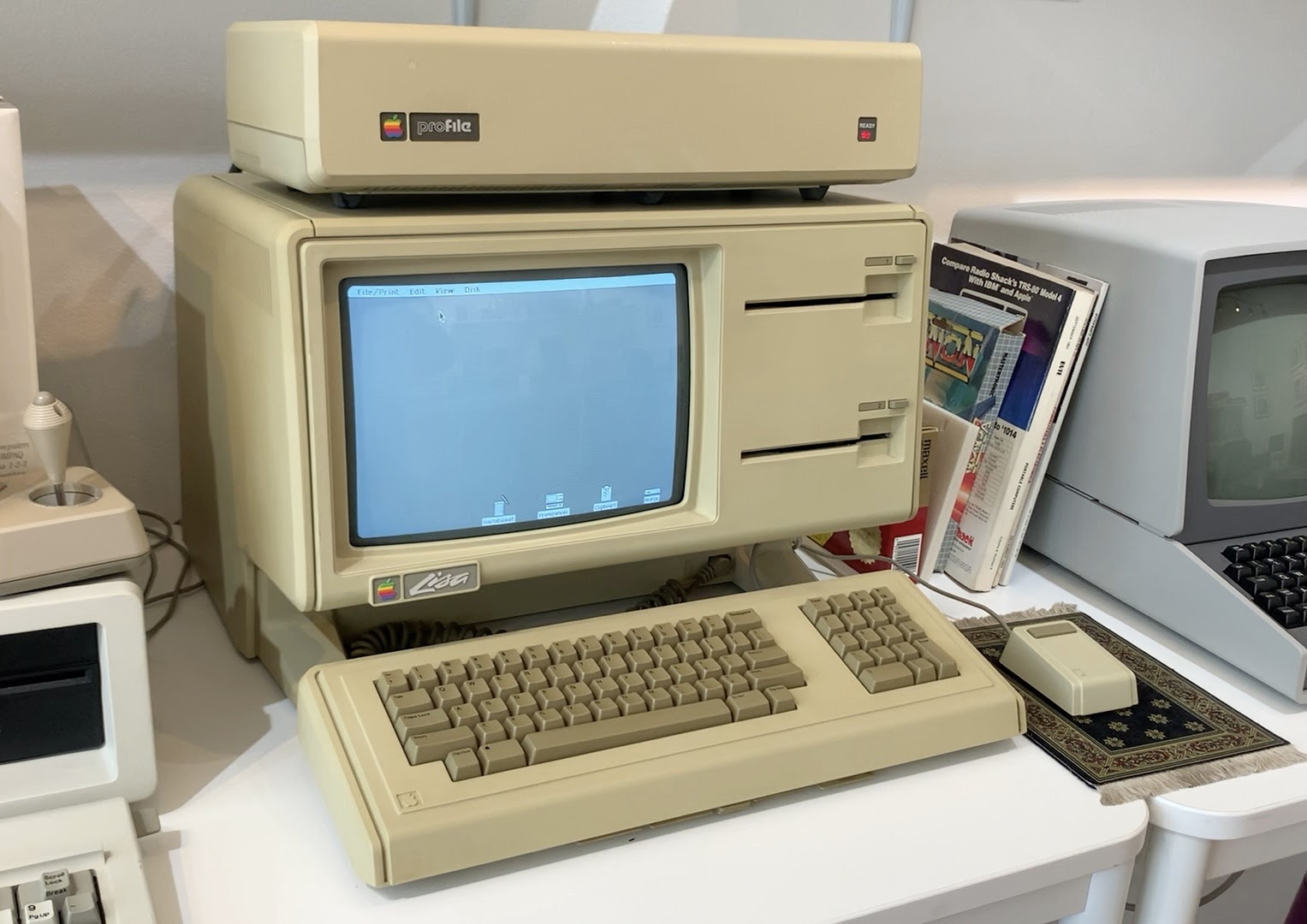
The display was a high-resolution bit-mapped, monochrome screen: individual pixels black or white only, with no true grayscale (shades were faked by intermixing black and white pixels). Apple deliberately chose a half-page display, showing the full 8½-inch width of a document but only part of its height, on the reasoning that a user could simply scroll. A full-page display's memory bandwidth, by one Apple engineer's calculation, ran to around 5.76 MB/second just for video at a 60 Hz refresh, and was not worth the cost and complexity. The bitmap display was the whole point of the machine: without it, as Apple's own marketing material conceded, the Lisa "would be constrained to the 80-column, text-only realm of traditional computers."
Storage is where the Lisa's ambition turned into a genuine engineering headache. The machine shipped with two "Twiggy" drives, named (with engineering humor) after the famously thin British model, because the drives were thin. Each was a single 5.25-inch high-density floppy holding 860 KB, with a software-controlled automatic eject mechanism and microstepping head technology. They were, in the words of one retrospective, "a little too revolutionary," and proved detrimental to both the Lisa's reliability and its schedule. After launch Apple wisely abandoned Twiggy for Sony's more reliable 3.5-inch 400 KB micro-floppies. Mass storage came from the ProFile hard disk (originally built for the Apple ///), holding 5 MB, later 10 MB on the Lisa 2/10. Expansion was generous for the era: two built-in serial ports (synchronous and asynchronous) and three expansion slots that could take Parallel Interface Boards, up to seven parallel peripherals in all.
Software & the Interface
The Lisa's reason to exist was the Lisa Office System (later renamed "Lisa 7/7"), a suite of seven tightly integrated applications: LisaWrite, LisaCalc, LisaGraph, LisaDraw, LisaProject, LisaList, and LisaTerminal. Six came with every machine; LisaTerminal was sold separately. Critically, the Lisa's core software was written largely in Pascal, a high-level language. That was a deliberate philosophical choice that distinguished it from the Macintosh, whose core was hand-written in 68000 assembly for speed. The Lisa's developers were building for the future; the Macintosh's were building to ship.
The interface is the Lisa's monument. It presented a desktop that mirrored a physical office: icons depicting documents, folders, and a wastebasket; a menu bar pinned to the top of the screen; and up to twenty overlapping windows whose size and position the user controlled completely. Documents were manipulated directly with the mouse, and the Lisa's mouse famously lost a button along the way. The team began with two buttons, but as they found alternative ways to implement the second button's functions, they simplified to one, a decision that shaped Apple's interface philosophy for decades. The guiding idea, stated plainly in Apple's own design papers, was that the interface should use "real-world concepts, not computer concepts": folders and pages, not commands and modes. Because there was no command language, very little typing was required to operate the machine at all. In 1983 this was close to science fiction.
Reception & Legacy
The Lisa failed. At $9,995 it was priced as office capital equipment in a market that did not yet understand why it needed a mouse, and its high price and low sales numbers made outside software developers reluctant to support it. Many inside Apple came to regard it, in the blunt phrase that recurs across the retrospectives, as "a failed experiment." When it was discontinued in 1985, the bulk of Apple's remaining inventory was sold to a Utah company, Sun Remarketing, which continued to sell the machine for years, re-badged and running Macintosh software as the Macintosh XL. Apple's own final stock of unsold Lisas was, notoriously, buried in a landfill, reportedly in connection with a stockholder lawsuit.
And yet. The Lisa's desktop metaphor, its mouse, its windows and icons and menus went directly into the Macintosh in 1984 and from there into the entire industry. Apple itself eventually acknowledged the debt: when Macintosh System 7 shipped in 1990, almost a decade after the Lisa's debut, it quietly included a dedication to the Lisa Desktop Manager and its designers, a small memorial buried in the software of the machine that had replaced it. For a commercial failure, that is an unusually durable form of victory.
The Archivist's Take
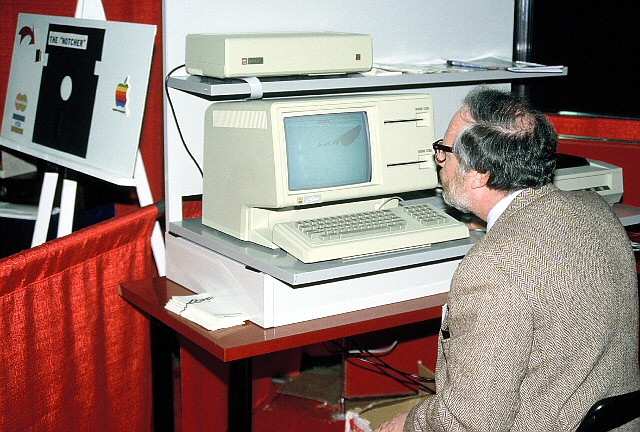
The Lisa is the most instructive failure in personal computing, because it failed for none of the reasons a bad product fails. The engineering was, if anything, too good: protected memory, virtual memory, and cooperative multitasking, all running on hardware that could barely hold a megabyte of RAM. The interface was conceived so well that we are still using it forty years later. The Lisa failed for exactly one reason. Apple priced a revolution at $9,995 and asked 1983 to pay for it up front. The Macintosh would succeed by being the same machine with the ambition sanded off and the price cut by four-fifths, and the cruelest detail in the story is that the Lisa's own engineers wrote its replacement.
If you collect or study these machines, the Lisa rewards the attention precisely because it is a complete, finished argument about what computers should be, an argument Apple lost in the market and won everywhere else. Treat a working Lisa as what it is: not a dead end but the prototype of the thing on your desk, sold a decade too early.
Specifications
| Manufacturer | Apple Computer, Inc. |
| Introduced | 19 January 1983 |
| Discontinued | April 1985 (superseded by Macintosh / Macintosh XL) |
| Launch price | $9,995 (USD) |
| CPU | Motorola 68000 — 32-bit registers, 16 MB address range, 14 addressing modes, memory-mapped I/O |
| RAM | 512 KB – 1 MB (two slots, MEM 1 / MEM 2); OS used virtual memory (disk swapping) |
| Display | High-resolution bit-mapped, monochrome (no grayscale); half-page (full 8½-in page width), 60 Hz |
| Floppy storage | 2 × "Twiggy" 5.25-in, 860 KB, auto-eject (later replaced by Sony 3.5-in 400 KB) |
| Hard disk | Apple ProFile, 5 MB (10 MB on Lisa 2/10) |
| Expansion / ports | 2 built-in serial ports (sync + async); 3 expansion slots; up to 7 parallel devices via Parallel Interface Boards |
| Operating system | Lisa Office System ("Lisa 7/7") — core written largely in Pascal |
| Bundled software | LisaWrite, LisaCalc, LisaGraph, LisaDraw, LisaProject, LisaList (+ LisaTerminal, sold separately) |
| Interface | Desktop GUI: icons, menu bar, up to 20 overlapping windows, one-button mouse |
| Development cost | ~$50 million, ~200 man-years |
Sources
This article is drawn from period and retrospective documentation in the Computopedia archive:
- Craig, D. T. — The Apple Lisa Computer: A Retrospective (CHAC Vol. 2 No. 1, 1994)
- Craig, D. T. — The Legacy of the Apple Lisa Personal Computer: An Outsider's View (1993)
- Daniels, B. — The Architecture of the Lisa Personal Computer
- Kato — Lisa Hardware (Apple, 1985)
- Perkins, R. — Inventing the Lisa User Interface (1997)
- Birss, E. — The Integrated Software and Hardware of the Apple Lisa (1984)
- Dines — The Lisa: A Case History (1985)
- Lisa / Macintosh Positioning — Lisa Sales & Marketing Binder (Apple, February 1984)
- The LisaTalk Report (1985, multiple issues)